Why Paper Still Works for Money Tracking in India
Apps automate everything except the habit. A ten-minute weekly ritual on paper — UPI, cash, subscriptions — builds clarity without another login.
Most money advice in India starts with an app. Download this, link your bank, watch the dashboard. It works for some people. For many of us, the notification is one more thing to ignore — and the subscription quietly renews anyway.
Paper is not nostalgia. It is friction in the right direction. You slow down enough to notice where ₹500 went on a Tuesday.
The 10-minute weekly ritual
Pick one fixed time — Sunday evening works for most salaries credited on the 1st or last working day. You need:
- Last week's UPI statement (GPay or PhonePe export)
- Any cash you remember spending
- Your notebook or a dedicated money journal
Write four columns: Date, What, Amount (₹), Need or want. No judgement column. Honesty beats optimisation.
What to track (and what to skip)
Track: UPI to people and shops, cash, subscriptions (OTT, cloud storage, gym), Swiggy or Zomato if it surprises you every month.
Skip for now: Investing SIPs you already automate, fixed rent, EMIs you cannot change this quarter. The goal is awareness of variable spend — not a forensic audit.
In Hyderabad, Bangalore, or Mumbai, variable spend often hides in food delivery and cab fares. Those two lines alone change month to month.
Paper vs apps — when each wins
| Paper journal | Money app | |
|---|---|---|
| Setup time | Minutes | Bank linking, permissions |
| Privacy | Stays on your desk | Third-party server |
| Habit cue | Physical object on table | Another icon on phone |
| Best for | Weekly reflection | Real-time categorisation |
Many people use both: app for totals, paper for the why behind large weeks.
Three mistakes we see from customers
- Daily tracking on day one. Start weekly. Daily fails when travel or festivals disrupt routine.
- Chasing perfect categories. "Food" is enough. You do not need fourteen sub-tags.
- Stopping after a bad month. The useful data is the month you overspent — not the month you were virtuous.
Journals that fit this habit
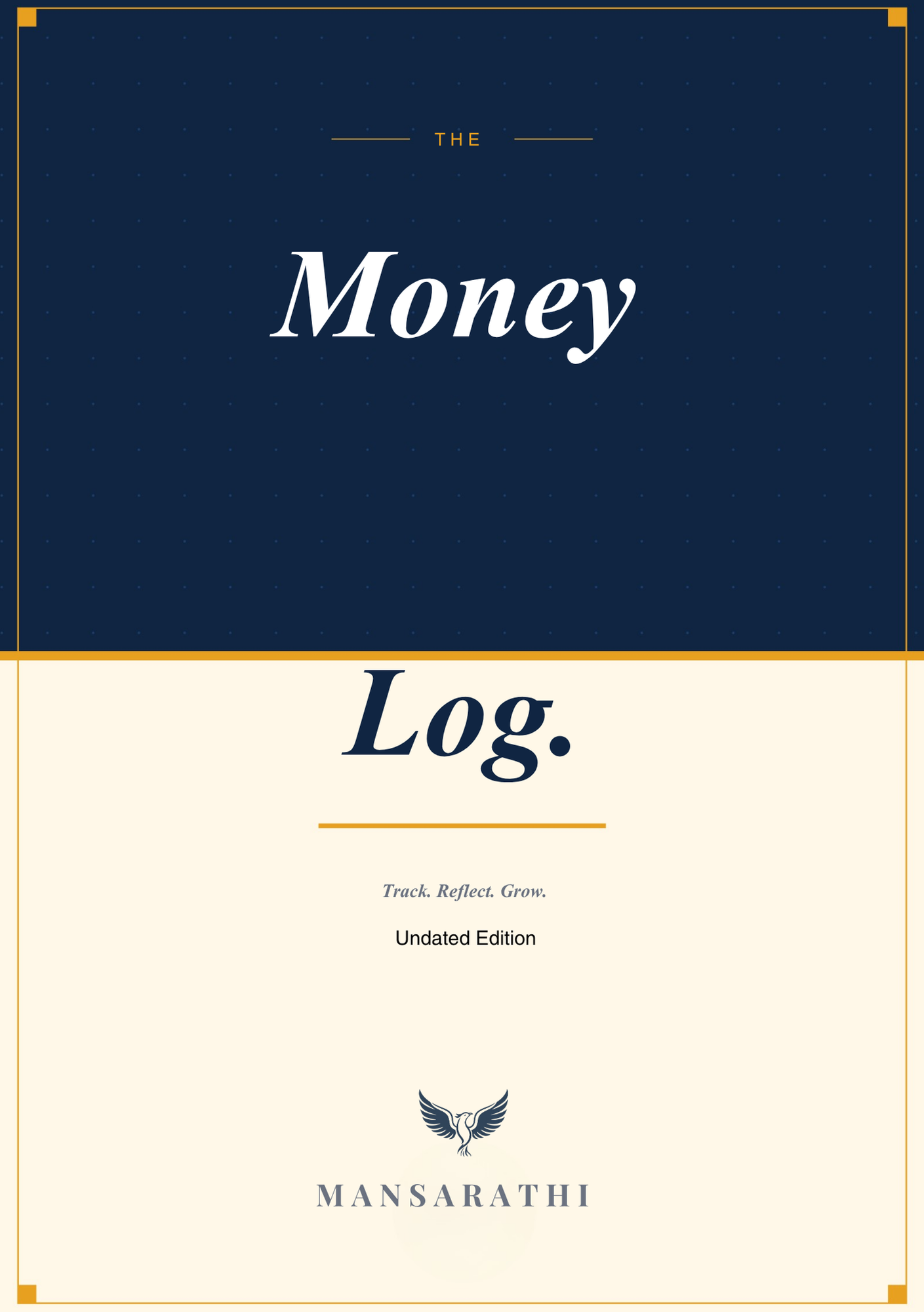
If money clarity is your main goal, start with the Money Log (₹899). For planning weeks alongside spending, pair it with the Dream Planner. For a lighter daily note without money columns, the Daily Book works well.
Not sure which to pick? Our buying guide compares every journal by use case.
Written from the ManSarathi studio, Hyderabad. We make stationery for quiet attention — not financial advice.